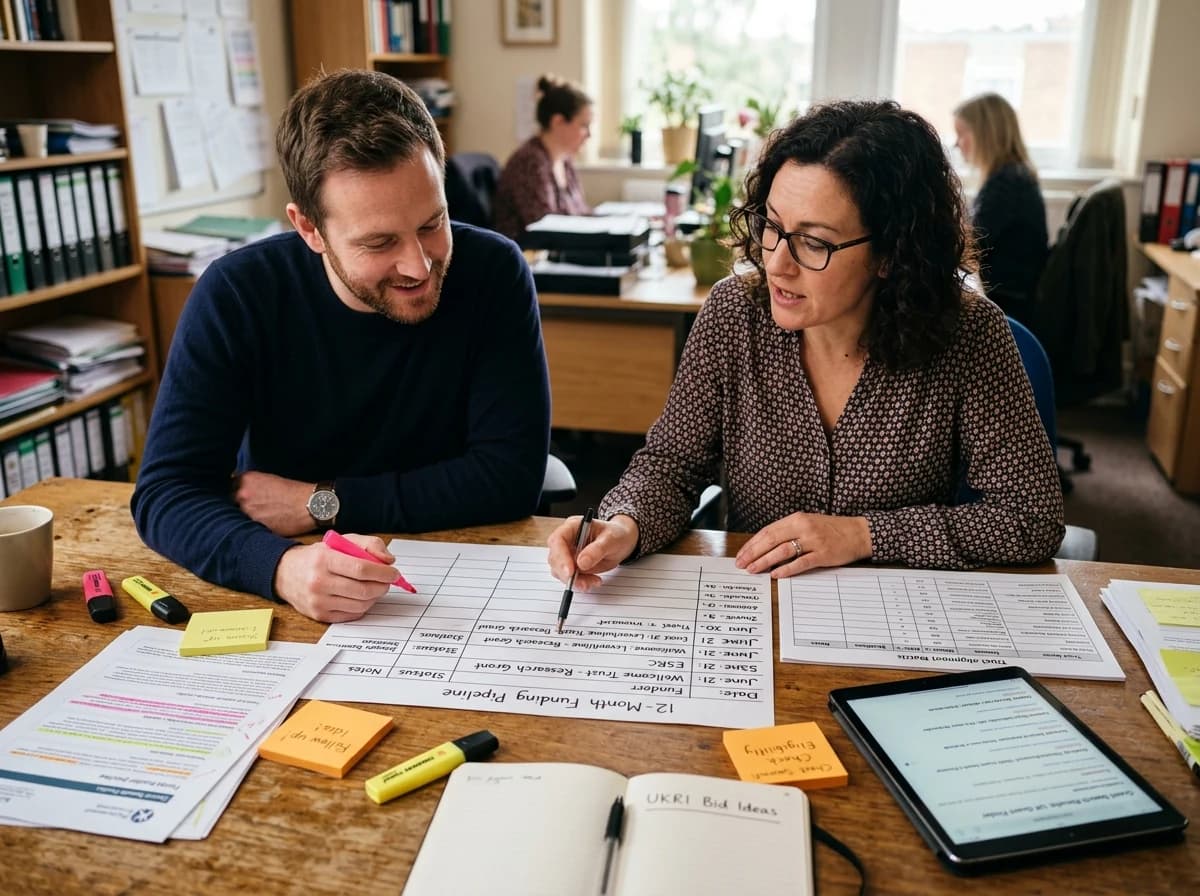
§Why Grant Writing is a Discipline, Not a Form-Filling Exercise
Many charity leaders and community activists believe that securing grant funding simply requires downloading an application form and writing compelling prose about the good work they do. In reality, grant making is a competitive, structured allocation of capital. Funders receive far more credible requests than they can ever fund.
To succeed consistently, an organisation must treat grant seeking as an end-to-end discipline. At Charity Grants HQ, we have codified this into a proven 8-Step Grant Seeking Process honed over more than 15 years of consulting for charities in the UK and Africa.
§Step 1: Plan Your Idea into a Structured Project
Before looking for a funder, step back and examine the actual project. What specific problem does your community face? Who are the beneficiaries? What will you actually deliver day-to-day?
* Do not invent a project just because a funder has money available.
* Anchor the project in genuine, verifiable community demand.
* Define project boundaries: where it starts, where it ends, and what resources are required.
§Step 2: Define Clear Aims and Measurable Objectives
Funders do not fund vague aspirations; they fund concrete change.
* **Aims** express the overarching long-term purpose (e.g. *“To reduce social isolation among elderly BAME residents in Balham”*).
* **Objectives** must be SMART: Specific, Measurable, Achievable, Relevant, and Time-bound (e.g. *“To provide weekly digital literacy classes to 45 older adults aged 65+ over a 12-month period”*).
§Step 3: Research Potential Funders Systematically
Never submit applications blindly. Conduct disciplined research across trusts, foundations, National Lottery programmes, and local authorities.
* Examine the funder’s stated giving criteria, geographic exclusions, and average grant sizes.
* Scrutinise past grantees to see whether the funder historically backs organisations of your size and type.
* Maintain a structured calendar mapping application windows and trustee decision meetings.
§Step 4: Read and Re-Read Funder Guidelines
The single greatest cause of immediate rejection is failure to follow published guidance.
* Note word limits, formatting requirements, and mandatory attachments (accounts, safeguarding policies, building leases).
* Look for key thematic phrases the funder uses (e.g. *“early intervention”*, *“user-led”*, *“community empowerment”*) and reflect those concepts genuinely within your narrative.
§Step 5: Build Constructive Relationships Where Possible
Whenever a funder allows pre-application contact or inquiries, take advantage of it.
* A brief phone call or introductory email can confirm whether your project fits their current funding priorities.
* If a funder officer agrees to visit your charity, prepare your trustees, have your financial manager present, and showcase your community impact with confidence and honesty.
§Step 6: Write a Persuasive, Evidence-Based Application
Draft the proposal using concise, direct language. Avoid jargon and exaggerated claims.
* **Statement of Need**: Provide census data, local council health statistics, and quotes from service users demonstrating that the need is real and urgent.
* **Project Description**: Clearly outline the activities, frequency, staffing, and timeline.
* **Realistic Budget**: Break down costs into realistic line items. Include staffing, room hire, materials, volunteer expenses, and a proportionate share of organisational overheads.
§Step 7: Revise, Review, and Edit Rigorously
Never submit a first draft.
* Ask an independent colleague or an experienced grant consultant to review the proposal against the funder's assessment rubric.
* Verify that every question has been answered directly without dodging difficult criteria.
* Double-check that all budget calculations balance perfectly with the requested sum.
§Step 8: Submit Ahead of the Deadline & Follow Up
Submit early to avoid server crashes or technical issues on the closing date.
* Ensure all trustees with signing authority have formally reviewed and approved the application.
* Keep an exact copy of the submitted document and all attachments.
* If the proposal is awarded, thank the funder immediately and establish your monitoring system. If declined, politely request constructive feedback to refine your next attempt.